Accelerate petroleum exploration
A seep sampling campaign can mature a basin from a frontier “unknown” area to an established
petroleum system in 1 year at a low cost; whereas conventional exploration with only
seismic and wells generally take 10+ years and 100 times the cost.
Seeps provide hard data
Seep samples often get a bad rap for being unreliable, but the seeps are out there. When collected properly, high-quality samples can provide accurate petroleum data. The real challenge lies in identifying the right seeps and sampling them correctly.
Accurate seep detection is key
You can't sample a seep if you don't know exactly where it is
Target seeps relevant to the petroleum system
Seafloor seeps can include brine seeps, biogenic gas seeps, and volcanic seeps. Our expertise lets us focus on the ones that matter most.
Getting the right data
Adjust the sampling strategy to match style, meet data requirements, balance competitive costs, and consider exploration impact.
White paper
De-Risking Deepwater Exploration
How Seep Hunting Provides Direct Evidence of Charge and Reduces Dry Holes
This paper presents an integrated seep and seismic workflow that combines multibeam bathymetry, water column imaging, targeted coring, and geochemical fingerprinting with structural and stratigraphic interpretation to directly confirm charge, migration pathways, and trap effectiveness.
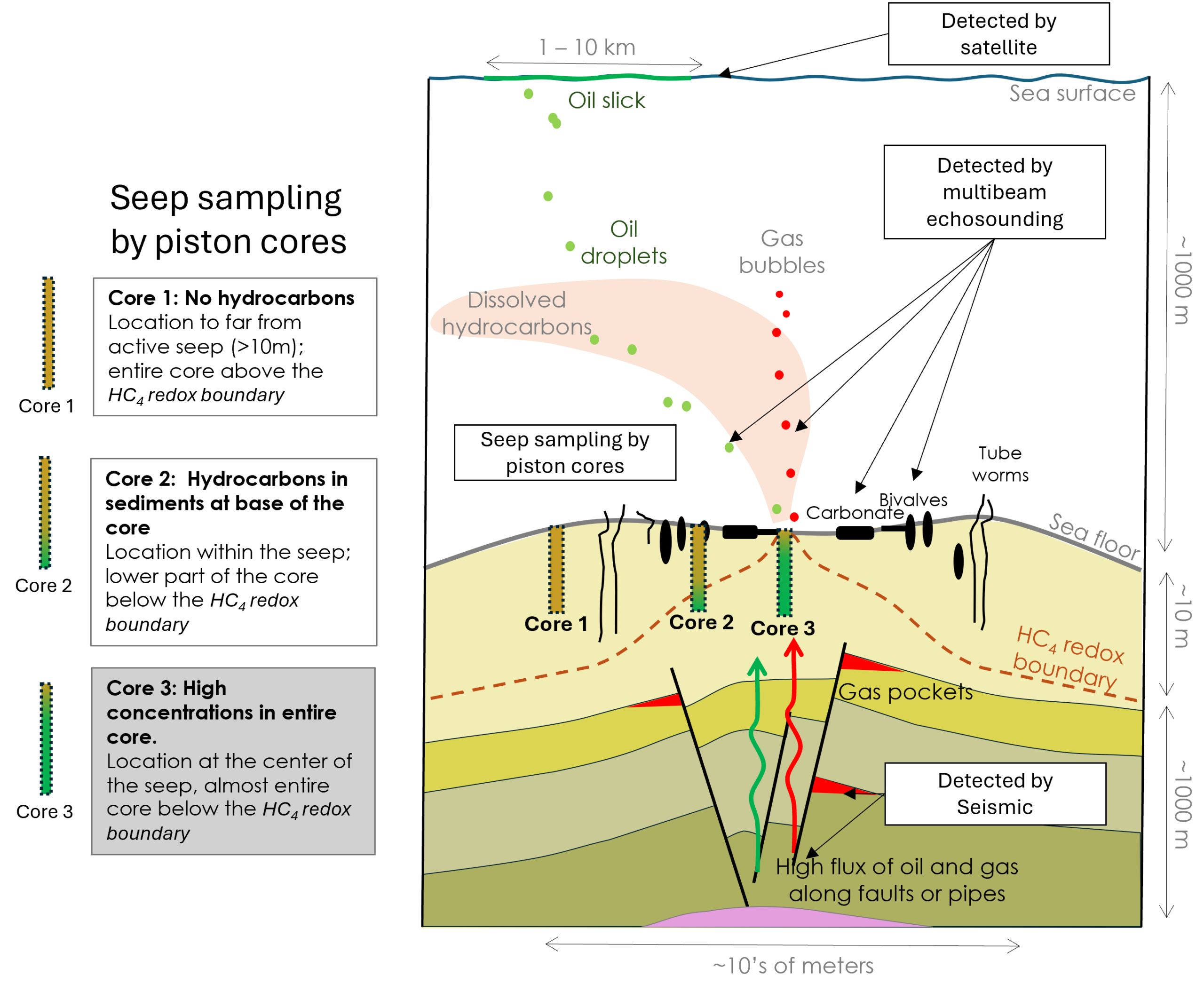
The secret to a successful seep-sampling campaign
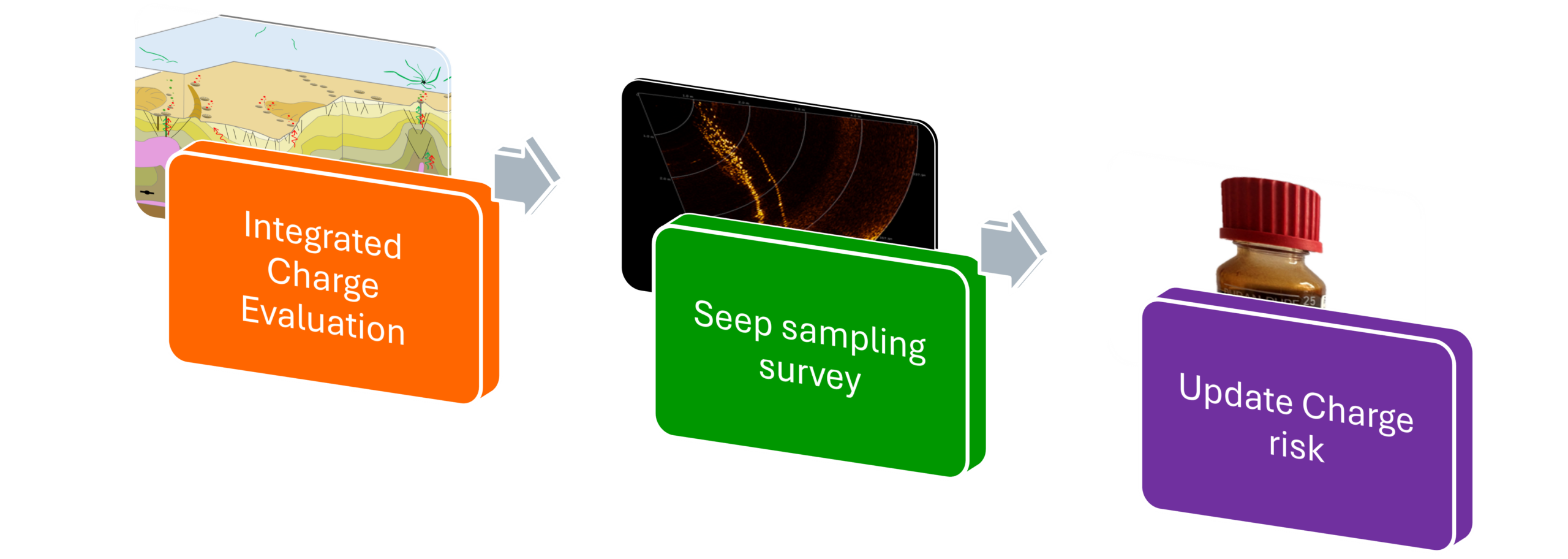
Seephunter Workflow
A seep-sampling survey requires relevant seeps that are connected to the petroleum system. This depends on geological factors and is established through the Integrated Charge Evaluation. In some cases, the recommendation may be to skip the survey if it is unlikely to yield meaningful results.